

by JoAnna Billete, CPA
Introduction
When it comes to budgeting, figuring out the difference between needs and wants is a game-changer. It sounds simple, but with advertising, peer pressure, and emotions in the mix, things get tricky. In this article, we tackle this topic head-on and share practical tips to help you master smart spending and balance everyday desires with your long-term financial goals.
Needs vs. Wants: The Great Spending Debate
At its core, needs are essentials required for survival and well-being, while wants are things that improve your quality of life but aren’t necessary. But how do you tell the difference when everything feels like a need?
- Needs: Rent, groceries, healthcare, basic clothing.
- Wants: Streaming subscriptions, designer bags, or daily lattes.
Quick Test:
Ask yourself, “Am I buying this because I need it to live or because I want it to feel good?”
Here’s a breakdown of common examples:
| Needs | Wants |
|---|---|
| Groceries | Dining out |
| Basic car for commuting | Luxury car upgrades |
| Health insurance | Spa treatments |
Pro Tip: Struggling to decide? Pause before purchasing and ask, “Will this improve my life, or just my day?”
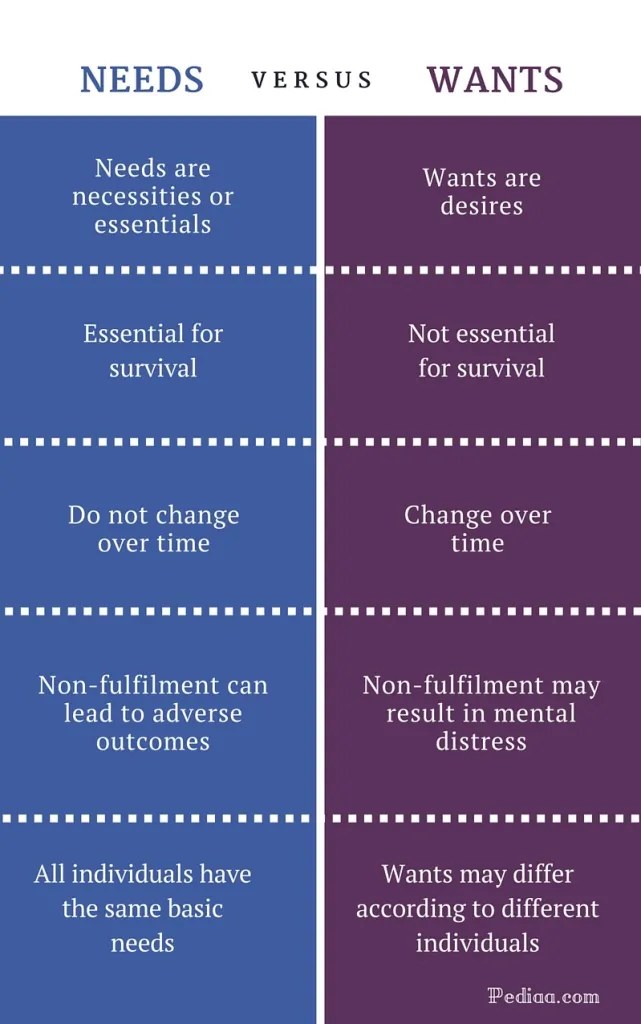
Image courtesy of pediaa.com
Why It’s Hard to Resist Wants
From social media to ads, we’re constantly bombarded with messages that make us feel like we need to upgrade everything. Studies show:
- 27% of Americans have no idea when they’ll be debt-free.
- 20% don’t know their partner’s income.
This highlights how emotions, peer pressure, and a lack of financial communication can lead to overspending.
Want to hear more examples and insights? Watch this episode of Deep Dives, where we explore the psychology behind needs and wants, and how to manage spending smartly.
4 Simple Hacks to Curb Impulse Spending
- Use a Budgeting Method That Fits You
- 50/30/20 Rule: 50% for needs, 30% for wants, 20% for savings and debt repayment.
- Zero-Based Budgeting: Every dollar gets a job, ensuring nothing is unaccounted for.
- Try the 7-Day Rule
- Tempted to buy something? Wait seven days. You’ll often find the urge fades, saving you from impulse purchases.
- Set Up Sinking Funds
- Open separate accounts for big goals like a vacation or home improvement. Knowing your savings are on track keeps you focused.
- Use Budgeting Tools
- Apps like Mint or YNAB can track your spending and even send alerts when you’re nearing your budget limit.
Building Financial Connections
Talking about money with loved ones can be uncomfortable but is essential for creating shared goals and avoiding conflicts.
- Start Casual: Discuss financial concerns, goals, and spending habits informally to open the door for bigger conversations.
- Work as a Team: Create joint plans that align with shared priorities, whether it’s paying down debt or saving for a dream vacation.
Pro Tip: Regular “money check-ins” with your partner can prevent misunderstandings and keep you on track.
Progress Over Perfection
No one is perfect with their finances, and that’s okay. The goal isn’t perfection—it’s progress.
- If you overspend, analyze why and adjust your approach.
- Celebrate small wins, like skipping one impulse purchase or saving an extra $50 this month.
“Budgeting isn’t just about cutting back—it’s about creating a future that excites you.”
Watch or Listen
Want more insights? Watch or listen to the full episode:
🎧 Listen on Spotify
📺 Watch on YouTube
Final Thoughts
Managing the balance between enjoying life now and planning for the future is a journey, not a destination. By being mindful of your spending and staying true to your goals, you’ll master smart spending and take control of your financial future.
What’s one “want” you can skip this week to move closer to your goals? Share your thoughts below!
 More Than Just Numbers
Leave a comment